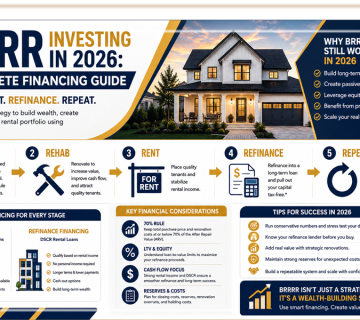



Why Smart Investors Are Refinancing Instead of Selling: How to Unlock Equity Without Giving Up Cash Flow
The real estate market has always rewarded investors who think long-term. While many property owners automatically consider selling when they’ve built significant equity, today’s most successful investors are taking a different approach—they’re refinancing instead.
Instead of paying capital gains taxes, losing valuable cash-flowing assets, and searching for their next investment in a competitive market, savvy investors are using refinancing to unlock their property’s equity while continuing to benefit from appreciation, rental income, and long-term wealth creation.
If you’ve owned an investment property for several years, now may be the perfect time to explore whether refinancing makes more financial sense than selling.
The Hidden Cost of Selling an Investment Property
Selling isn’t just about collecting a profit.
It often comes with significant expenses, including:
- Capital gains taxes
- Depreciation recapture
- Realtor commissions
- Closing costs
- Property preparation and repairs
- Vacancy before sale
- Time spent finding another investment
Even after a successful sale, investors frequently discover it’s difficult to replace the income-producing asset they just gave up.
Finding another quality investment at today’s prices can take months—and may generate lower returns than the property you already own.
Why Refinancing Makes More Sense
A refinance allows investors to convert built-up equity into working capital without selling the property.
This means you continue owning the asset while putting your equity back to work.
Benefits include:
Keep Your Cash-Flowing Property
If your property generates positive monthly cash flow, why give it up?
Refinancing allows you to maintain rental income while accessing the equity you’ve built.
Unlock Tax-Advantaged Capital
Cash received through refinancing is generally considered loan proceeds—not taxable income.
While every investor should consult their CPA regarding their individual tax situation, refinancing often provides access to capital without triggering the immediate tax consequences associated with selling.
Grow Your Portfolio Faster
One property’s equity can become the down payment for another.
Many experienced investors use refinancing to:
- Purchase additional rental properties
- Finance Fix & Flip projects
- Acquire multifamily investments
- Invest in commercial real estate
- Build new construction projects
Rather than allowing equity to remain trapped inside a property, refinancing helps put that capital back to work.
Improve Cash Flow
Depending on current financing and market conditions, refinancing may help:
- Reduce monthly loan payments
- Extend loan terms
- Consolidate higher-interest debt
- Improve overall cash flow
More available monthly cash means greater flexibility for repairs, reserves, or future investments.
Preserve Long-Term Appreciation
Historically, well-selected real estate has appreciated over time.
Selling means giving up future appreciation.
Refinancing allows investors to benefit from:
- Future property appreciation
- Rental income
- Mortgage paydown by tenants
- Portfolio growth
Your property can continue building wealth while simultaneously providing access to today’s equity.
When Refinancing Makes the Most Sense
Refinancing may be an excellent option if:
- Your property has appreciated significantly.
- You have substantial equity.
- Rental income is stable.
- You want funds for another investment.
- You need capital for renovations.
- You want to consolidate investment debt.
- You’re planning to expand your real estate portfolio.
- You don’t want to trigger a taxable sale.
Refinancing and the BRRRR Strategy
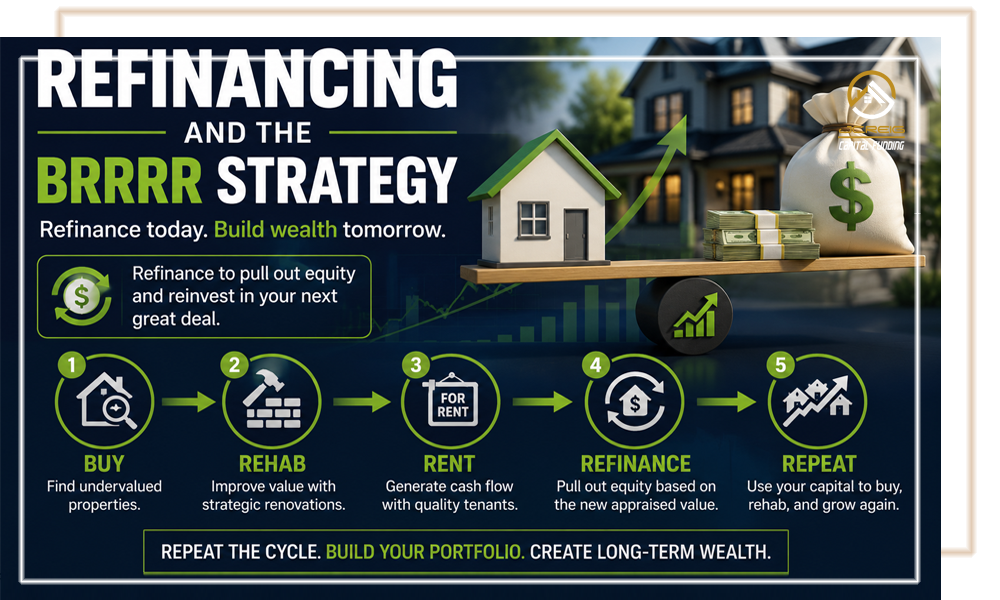
For investors following the BRRRR (Buy, Rehab, Rent, Refinance, Repeat) strategy, refinancing is the engine that drives long-term portfolio growth.
Here’s how it works:
- Buy an undervalued property.
- Renovate to increase value.
- Rent the property to create steady cash flow.
- Refinance based on the property’s improved value.
- Pull out equity to purchase the next investment.
This approach allows investors to recycle their capital repeatedly while building a portfolio of income-producing assets.
💡 Pro Tip: Refinance Before You Need the Money
Many experienced real estate investors make the mistake of waiting until they need capital to refinance. By then, market conditions, property performance, or lending requirements may not be as favorable.
Instead, consider refinancing when your property is stabilized, cash flowing, and has appreciated in value. Accessing your equity during a position of financial strength gives you more flexibility and allows you to move quickly when the right investment opportunity appears.
Whether you’re planning to purchase another rental, fund a Fix & Flip, or simply create a reserve for future opportunities, having available capital before you need it can provide a significant competitive advantage.
Investor Insight: Successful investors don’t just build equity—they strategically leverage it. A well-timed refinance can transform dormant equity into the fuel that grows your real estate portfolio without sacrificing the long-term benefits of owning income-producing properties.
DSCR Loans Make Refinancing Easier
Many investors worry they’ll need years of tax returns, employment verification, or mountains of paperwork to refinance.
That’s where Debt Service Coverage Ratio (DSCR) Loans can simplify the process.
Rather than focusing primarily on personal income, DSCR loans evaluate whether the property’s rental income is sufficient to cover its debt obligations.
Potential benefits include:
- Qualification based primarily on rental income
- No personal income verification (program dependent)
- No tax returns required (program dependent)
- Ideal for LLC ownership
- Excellent for long-term rental portfolios
- Fast approvals and closings
For real estate investors, DSCR financing can be an efficient way to refinance stabilized rental properties.
Common Reasons Investors Refinance
Real estate investors refinance for many reasons, including:
Cash-Out Refinance
Access equity to fund new investments, renovations, or business opportunities.
Rate and Term Refinance
Replace an existing loan with improved financing terms.
Portfolio Expansion
Use available equity as down payments on additional acquisitions.
Debt Consolidation
Simplify multiple investment loans into more manageable financing.
Property Improvements
Finance renovations that can increase property value and rental income.
Is Refinancing Right for You?
Every investment strategy is unique.
Refinancing may be worth considering if your goals include:
- Building long-term wealth
- Expanding your portfolio
- Increasing monthly cash flow
- Leveraging existing equity
- Preserving appreciating assets
- Avoiding an immediate taxable sale
- Growing your real estate business
The right financing strategy depends on your property’s value, equity position, investment goals, and overall financial plan.

Final Thoughts
Successful real estate investing isn’t simply about buying and selling properties—it’s about making your capital work harder.
The most experienced investors understand that equity locked inside a property represents opportunity. By refinancing instead of selling, they can preserve valuable income-producing assets, continue benefiting from appreciation, and access capital to pursue their next investment.
If your property has built significant equity, refinancing could be one of the smartest financial moves you make this year.
Ready to Put Your Equity to Work?
Don’t let your property’s equity sit idle. Turn it into your next investment opportunity.
Whether you’re looking to expand your rental portfolio, finance your next Fix & Flip, consolidate investment debt, or simply improve your cash flow, JCREIG Capital Funding can help you explore financing solutions tailored to real estate investors.
Contact JCREIG Capital Funding today for a complimentary investment financing consultation.
✔ Investment Property Refinancing
✔ Cash-Out Refinance Options
✔ DSCR Loans
✔ Fix & Flip Financing
✔ Bridge Loans
✔ Ground-Up Construction Loans
✔ Commercial & Multifamily Financing📞 Call: (561) 303-0334
🌐 Visit: www.jcreigcapitalfunding.comYour equity built your success—now let it help fund your next one.
FAQs
Refinancing allows you to access your property’s equity without giving up ownership. You can continue collecting rental income, benefit from future appreciation, and potentially avoid the immediate tax consequences associated with selling. (Always consult your tax advisor regarding your specific situation.)
A cash-out refinance replaces your existing mortgage with a new loan for a higher amount, allowing you to receive the difference in cash. Investors commonly use these funds to purchase additional properties, renovate existing investments, pay off higher-interest debt, or increase cash reserves.
The amount of equity required depends on the lender, loan program, property type, and your overall financial profile. Many investment property loan programs require you to maintain a certain level of equity after refinancing.
There are virtually no restrictions on how you use the proceeds. Common uses include:
- Purchasing another investment property
- Funding a Fix & Flip project
- Property renovations
- Down payments on new acquisitions
- Debt consolidation
- Building cash reserves
- Business expansion
A Debt Service Coverage Ratio (DSCR) loan is designed specifically for real estate investors. Rather than focusing primarily on your personal income, lenders evaluate whether the property’s rental income is sufficient to cover the mortgage payment and other qualifying debt obligations.
Many DSCR loan programs do not require personal income verification or tax returns because qualification is primarily based on the property’s cash flow. Program guidelines vary, so it’s important to discuss your specific scenario with your lender.
Yes. Many investment property refinance programs allow borrowers to refinance properties held in an LLC or other business entity, provided the loan meets the lender’s eligibility requirements.
Generally, the proceeds from a refinance are considered loan funds—not taxable income. However, tax laws vary based on your circumstances, so you should consult a qualified CPA or tax professional before making financial decisions.
Absolutely. Many investors refinance out of a hard money loan once renovations are complete and the property is stabilized. This is a common step in the BRRRR (Buy, Rehab, Rent, Refinance, Repeat) investment strategy.
While every transaction is different, investment property refinances often close within 2 to 4 weeks, depending on factors such as appraisal timing, title work, documentation, and underwriting.
It can, depending on your current loan, interest rate, loan term, and the amount being refinanced. Some investors refinance to improve monthly cash flow, while others prioritize accessing equity for future investments.
Yes. Many professional real estate investors refinance multiple properties as part of a long-term portfolio strategy. Financing options are available for single-family rentals, multifamily properties, mixed-use buildings, and commercial real estate.
The ideal time to refinance is when:
- Your property has appreciated in value.
- You’ve built significant equity.
- Rental income has stabilized.
- You’ve completed renovations.
- You want to expand your portfolio.
- Market conditions align with your investment goals.
Yes. Many successful investors use the equity from one property to help acquire additional investments. This strategy allows them to recycle capital while continuing to own cash-flowing assets.
Every investor’s situation is unique. The best way to determine whether refinancing makes sense is to review your property’s equity, current financing, investment goals, and long-term strategy with an experienced investment lender.
Whether you’re looking to pull cash out, lower your financing costs, expand your rental portfolio, or refinance out of a hard money loan, JCREIG Capital Funding is here to help.
Contact us today to discuss your investment goals and explore financing solutions designed specifically for real estate investors.
📞 (561) 303-0334
🌐 www.jcreigcapitalfunding.com
Your next investment opportunity could already be sitting in the equity you’ve built. Let us help you put it to work.