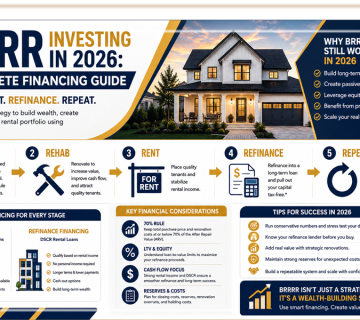



The Short Answer: Yes—If You Have the Right Financing Strategy
For years, the BRRRR strategy (Buy, Rehab, Rent, Refinance, Repeat) has been one of the most effective ways for real estate investors to build wealth and scale their rental portfolios.
But with changing interest rates, rising construction costs, and shifting home values, many investors are asking:
“Is BRRRR still worth it in 2026?“
The answer is absolutely—but success depends on buying the right property, controlling renovation costs, and working with a lender who understands investment real estate.
Let’s explore why BRRRR continues to be one of the strongest investment strategies in today’s market.
What Is the BRRRR Strategy?
BRRRR stands for:
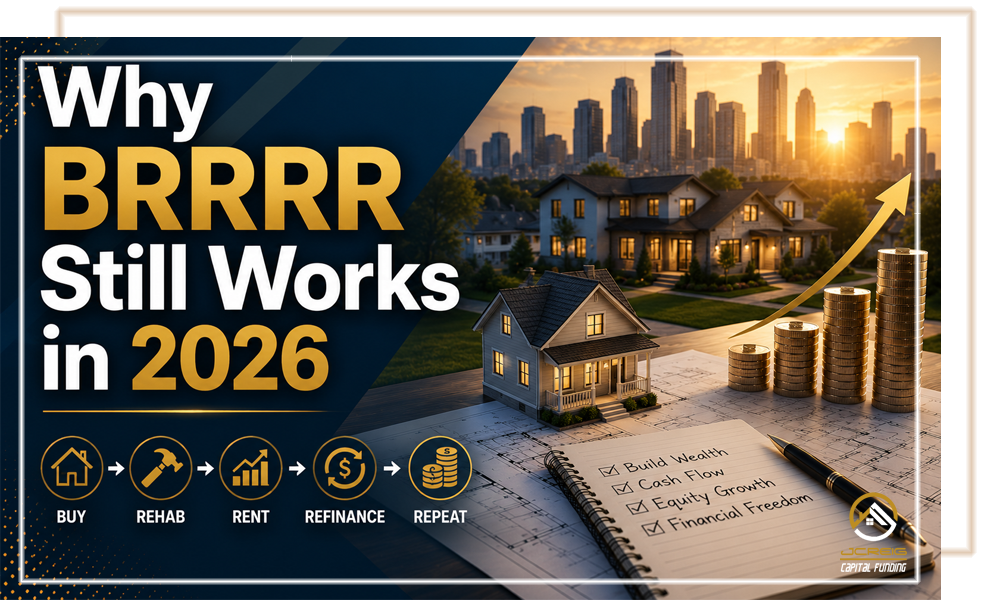
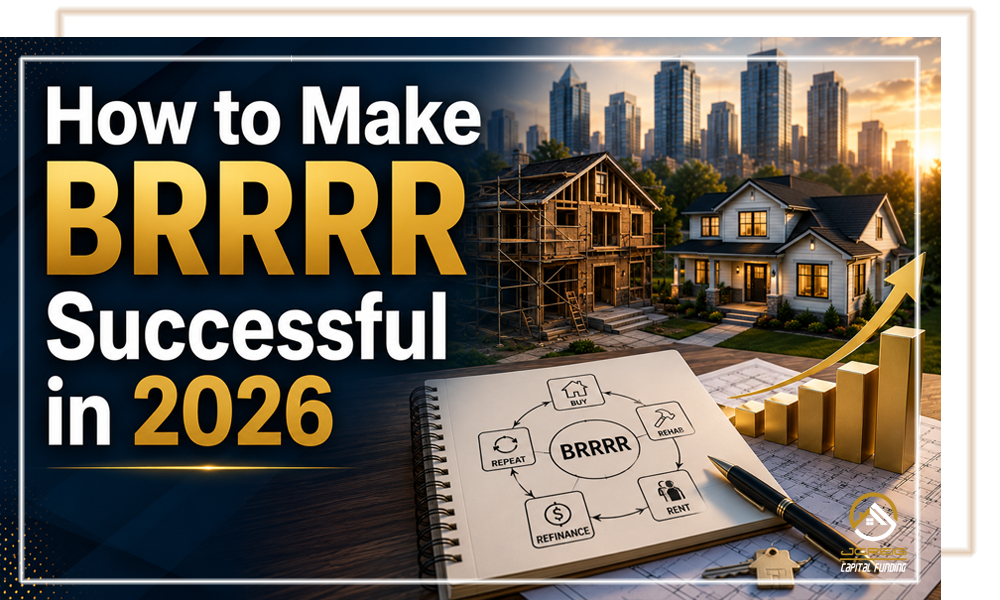
Buy – Purchase an undervalued property below market value.
Rehab – Renovate the property to increase its value and rental appeal.
Rent – Place qualified tenants to generate consistent cash flow.
Refinance – Refinance into a long-term rental loan, often a DSCR loan, based on the property’s new value.
Repeat – Use the cash received from refinancing to purchase your next investment property.
Instead of tying up large amounts of capital in one property, BRRRR allows investors to recycle equity into future acquisitions.
Why BRRRR Still Works in 2026
Although market conditions have changed, the fundamentals of BRRRR remain strong.
1. Inventory Still Creates Opportunity
Many homes still require cosmetic updates or significant renovations.
Motivated sellers, inherited properties, distressed homes, and outdated rentals continue to provide opportunities for investors who know how to recognize value.
Buying below market value remains the foundation of a successful BRRRR deal.
2. Rental Demand Remains Strong
Across much of the country, rental demand continues to outpace supply.
High home prices and affordability challenges have kept many prospective buyers in the rental market longer, creating strong demand for quality rental housing.
Well-renovated homes in desirable neighborhoods often attract reliable tenants and competitive rental rates.
3. Forced Appreciation Beats Waiting for the Market
One of BRRRR’s biggest advantages is that investors create value rather than waiting for appreciation.
Examples include:
- Updating kitchens
- Renovating bathrooms
- New flooring
- Fresh paint
- Roof replacement
- HVAC upgrades
- Landscaping
- Exterior improvements
These improvements can significantly increase a property’s After Repair Value (ARV), allowing investors to refinance based on the property’s improved value instead of its original purchase price.
The Biggest Challenge in 2026
The challenge isn’t whether BRRRR works.
It’s whether your financing supports your strategy.
Many investors lose opportunities because they experience:
- Slow underwriting
- Delayed closings
- Limited rehab funding
- Restrictive lending guidelines
- Poor communication during the renovation process
A great investment can quickly become an expensive problem if financing delays prevent you from completing the project on schedule.
Why Financing Matters More Than Ever
The ideal BRRRR lender understands investment properties—not just traditional mortgages.
Experienced private and hard money lenders can often provide:
- Fast approvals
- Flexible underwriting
- Financing for acquisition and renovation
- Draw schedules designed for rehab projects
- Investor-focused lending solutions
The faster you complete renovations and refinance, the sooner you can move on to your next investment.
Refinancing Into a DSCR Loan
One of the most popular exits from a BRRRR project is refinancing into a Debt Service Coverage Ratio (DSCR) loan.
Unlike conventional mortgages, DSCR loans primarily evaluate the property’s ability to generate rental income rather than relying heavily on the borrower’s personal income.
Benefits often include:
- No tax returns required in many cases
- Qualification based largely on property cash flow
- Ideal for LLC ownership structures
- Designed specifically for rental property investors
- Long-term financing options
This allows investors to keep growing without many of the limitations associated with conventional financing.
How to Make BRRRR Successful in 2026
Successful investors are focusing on discipline rather than speculation.
Buy Below Market Value
Your profit is made when you buy—not when you sell.
Budget Conservatively
Always include contingency funds for unexpected repairs.
Know Your ARV
A realistic After Repair Value is critical to determining whether a deal works.
Understand Local Rental Demand
Research rents, vacancy rates, and neighborhood trends before purchasing.
Build the Right Team
Successful BRRRR investors rely on experienced contractors, real estate agents, property managers, title companies, and lenders who specialize in investment properties.
Common Mistakes to Avoid
Many first-time investors struggle because they:
- Overpay for properties
- Underestimate renovation costs
- Overestimate ARV
- Ignore holding costs
- Choose inexperienced contractors
- Wait too long to refinance
- Work with lenders unfamiliar with investment properties
Avoiding these mistakes can dramatically improve both profitability and scalability.
Is BRRRR Better Than Flipping?
Both strategies have their advantages.
- Faster profits
- Higher tax exposure
- Must continually find new deals
- Income stops after the sale
- Builds long-term wealth
- Generates recurring monthly cash flow
- Allows portfolio growth
- Creates long-term equity
- Offers potential appreciation over time
Many experienced investors use both strategies depending on market conditions and investment goals.
How JCREIG Capital Funding Can Help
At JCREIG Capital Funding, we work with real estate investors who want to grow their portfolios efficiently.
Our financing solutions are designed to support every stage of the BRRRR process—from purchasing and renovating properties to preparing for long-term refinancing.
Our programs include:
- Fix & Flip Loans
- Bridge Financing
- Rental Property Loans
- DSCR Loans
- Multi-Family Financing
- Mixed-Use Property Loans
- Ground-Up Construction Loans
Whether you’re completing your first BRRRR project or scaling a portfolio of investment properties, our team understands the speed and flexibility investors need to stay competitive.
Final Thoughts
Despite changing market conditions, the BRRRR strategy remains one of the most effective ways to build long-term wealth through real estate in 2026.
The key is buying wisely, renovating strategically, and partnering with experienced professionals who understand investment lending.
If you have a strong deal and the right financing, BRRRR can continue to help you generate cash flow, build equity, and expand your portfolio—one property at a time.
Ready to Finance Your Next BRRRR Deal?
Another rental to your portfolio, JCREIG Capital Funding is here to help.
Contact our team today to discuss your next project and discover financing solutions tailored to your investment strategy.
FAQs
The BRRRR strategy stands for Buy, Rehab, Rent, Refinance, Repeat. It’s a real estate investment method that allows investors to purchase undervalued properties, renovate them, rent them out, refinance based on the improved value, and use the equity to purchase additional investment properties.
Yes. The BRRRR strategy remains a viable investment approach in 2026, especially in markets with strong rental demand and opportunities to purchase properties below market value. Success depends on careful property selection, accurate renovation budgeting, and having the right financing.
Many investors begin with a Fix & Flip or bridge loan to finance the purchase and renovation. Once the property is stabilized with a tenant, they often refinance into a long-term DSCR (Debt Service Coverage Ratio) loan or another rental property loan.
The amount varies depending on the property’s purchase price, renovation costs, and financing program. Many lenders offer financing for both acquisition and rehab, reducing the amount of cash investors need to bring to closing.
A DSCR loan is designed for investment properties and generally qualifies borrowers based on the property’s rental income rather than their personal income. This makes it an attractive refinancing option for many real estate investors growing their rental portfolios.
Common risks include overpaying for a property, underestimating renovation costs, overestimating the After Repair Value (ARV), unexpected holding costs, contractor delays, and difficulty refinancing if the property doesn’t meet lender requirements.
It depends on your investment goals. Flipping can provide faster profits, while the BRRRR strategy focuses on building long-term wealth through rental income, property appreciation, and portfolio growth.
Investors should evaluate the purchase price, estimated renovation costs, After Repair Value (ARV), projected rental income, financing costs, operating expenses, and expected refinance proceeds. Running these numbers before purchasing helps determine whether the investment meets your financial goals.
Yes. While there is a learning curve, many first-time investors successfully complete BRRRR projects by working with experienced lenders, contractors, real estate agents, and property managers.
JCREIG Capital Funding offers financing solutions for real estate investors, including Fix & Flip loans, bridge financing, rental property loans, DSCR loans, multi-family financing, mixed-use property loans, and ground-up construction loans. Our team works with investors to help finance acquisitions, renovations, and long-term investment strategies.